Europe's Electric Car Boom

Chris Isidore
| 02-11-2026
 · Vehicle Team
Electric vehicles are becoming an increasingly familiar sight on European roads. Yet while some countries are rapidly replacing petrol and diesel cars, others are adopting battery-powered transport much more slowly.
Figures published by Eurostat and the European Automobile Manufacturers' Association reveal that almost 1.9 million new fully electric cars were registered across the European Union in 2025. They represented 17.3% of all new passenger car registrations, a remarkable increase from just 0.4% a decade earlier.
However, the growing popularity of electric vehicles hides substantial differences between national markets.
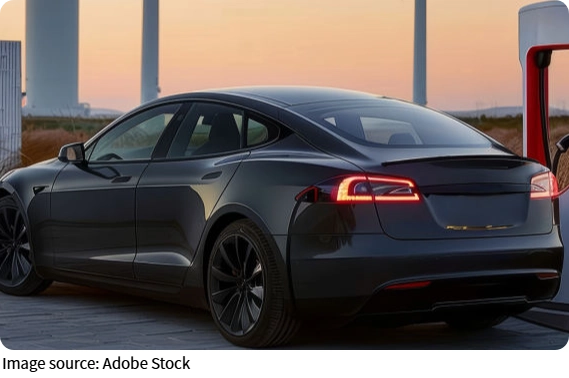
Norway Leads The Electric Revolution
Norway has achieved an extraordinary transformation in its automotive market. In 2025, more than 95% of newly registered passenger cars were fully electric, placing the country far ahead of its European neighbours.
Denmark followed with 67.8%, while Iceland reached 41.2%. Malta, Finland and Sweden also recorded shares exceeding 36%.
These figures demonstrate particularly strong electric vehicle adoption across northern Europe, although the pace of change remains considerably slower elsewhere.
Germany Records The Most Sales
When comparing the number of vehicles rather than market share, Germany emerges as Europe's largest electric car market.
Approximately 545,000 battery-electric passenger cars were registered there in 2025, followed by 473,000 in the United Kingdom and 331,000 in France.
Turkey recorded 187,000 registrations, while Norway reached 173,000.
Among Europe's five largest economies, Britain had the highest electric vehicle share of new registrations at 23.4%. France followed at 19.6%, narrowly ahead of Germany at 19.1%.
Southern Europe Falls Behind
The picture looks different in Mediterranean markets.
Fully electric vehicles accounted for just 8.7% of new registrations in Spain and 6.1% in Italy during 2025.
Italy recorded approximately 95,000 new battery-electric cars, considerably fewer than Germany despite being one of Europe's largest economies.
Adoption was also limited across several Balkan countries. Croatia, Montenegro, Serbia and Bosnia and Herzegovina each recorded electric vehicle shares below 2%.
These differences highlight the uneven pace of Europe's shift towards battery-powered transport.
Most Cars Still Use Conventional Engines
Despite strong growth in new registrations, fully electric cars remain a relatively small proportion of vehicles already on European roads.
By the end of 2025, they represented only 2.9% of the EU's total passenger car fleet.
Norway again stood out, with electric vehicles accounting for 32% of its existing cars. Denmark followed at 17.9%, while Luxembourg and Sweden recorded 8.7% and 8.6% respectively.
Germany's figure was 4.1%, compared with 3.9% in France. Spain and Italy remained much lower, at 1.1% and 0.9%.
This difference between new sales and existing vehicles is important because replacing an entire national car fleet takes many years.
What Is Driving The Change?
Electric vehicle adoption depends on several factors, including purchase prices, charging availability and running costs.
National incentives can also influence buying decisions, while the availability of affordable models determines whether electric cars appeal beyond wealthier households.
Charging access remains particularly important for drivers living in flats or travelling long distances.
Although more electric models are entering the market, national differences in infrastructure and affordability continue to shape demand.
What Comes Next For Europe?
Europe's electric vehicle market has expanded dramatically, but the transition is progressing at very different speeds. The latest figures suggest that improving affordability and charging access will remain essential as battery-powered cars gradually replace older vehicles.

