Sky Waste Crisis

Pardeep Singh
| 12-12-2025
 · Astronomy Team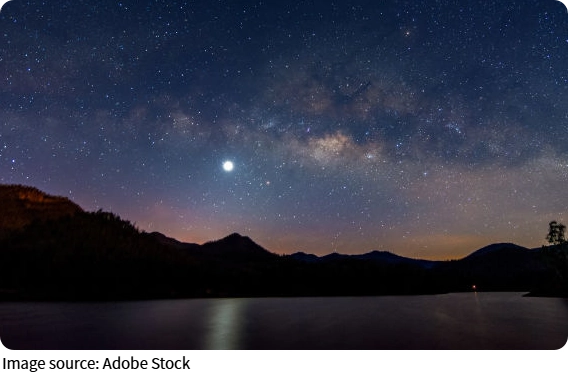
Every night, the sky looks calm and endless, but behind that peaceful view, something troubling is unfolding. The more we launch rockets and satellites, the more waste we leave behind.
Space pollution is quietly becoming one of the fastest-growing environmental threats of our time. It’s not just a problem for scientists—it’s a problem for all of us who share this planet. Let’s uncover how our sky is filling up with debris and what steps we can take to protect it.
The Launch Boom: Growth with Hidden Costs
In the past fifteen years, the number of rocket launches has nearly tripled, while active satellites orbiting Earth have increased tenfold. These figures sound exciting, but they come with a hidden danger—an unprecedented rise in space debris. Every year, hundreds of tons of old satellites and fragments burn up in the atmosphere, releasing pollutants into the upper air.
By the end of this decade, experts predict that nearly 100,000 spacecraft will orbit our planet, many from mega-constellation projects like SpaceX’s Starlink. That could mean more than 3,000 tons of debris entering the atmosphere annually. If left unchecked, our sky might one day resemble a massive floating landfill.
The Real Threat: More Than Just Dust
When rockets launch or satellites burn up during reentry, they release two major pollutants—soot and aluminum oxide. These aren’t simple particles; they have long-lasting effects on the atmosphere and Earth’s climate balance.
Soot, produced by the burning of fuel, traps heat in the upper atmosphere. This warming can contribute to ozone layer depletion, allowing more ultraviolet radiation to reach Earth’s surface.
Aluminum oxide, generated when satellites disintegrate, interferes with the planet’s heat regulation. Scientists warn that the concentration of this compound in the stratosphere could increase by 65% within decades, speeding up ozone loss. Even metallic dust from reentry might weaken Earth’s magnetic shield, allowing more cosmic radiation to reach the ground. These changes could have far-reaching consequences for our planet’s stability.
High-Altitude Pollution: The Invisible Challenge
Unlike ground-level pollution, which can be measured and managed, the pollution created by rockets and satellites occurs at extremely high altitudes—sometimes tens of kilometers above the surface. In these upper layers of the atmosphere, chemical reactions happen much more slowly, meaning pollutants can linger for hundreds of years.
Sebastian Eastham from Imperial College London describes this as “an untested zone of pollution.” We still know very little about the long-term effects of these emissions. Scientists are now exploring methods to guide satellite reentries at lower altitudes, so debris burns closer to Earth and particles settle faster. Whether this approach will prove effective remains to be seen.
Act Now Before It’s Too Late
Professor Min-Kwan Kim from the University of Southampton warns, “If we don’t act within the next five years, it might be too late.” Like climate change, the earlier we take action, the better the outcome.
Currently, no international laws regulate rocket or satellite-related atmospheric pollution. The Public Interest Research Group (PIRG) has already called for a pause on large-scale satellite projects until a complete environmental assessment is done. Unfortunately, technology has advanced faster than global policy, leaving a dangerous gap that must be filled soon.
Steps Toward a Cleaner Sky
This issue goes far beyond scientists or engineers—it concerns all of us. Here’s what we can do:
1. Raise public awareness.
Most people have never heard of “upper-atmosphere pollution.” It’s invisible, yet it can change our weather and climate over time. Educational campaigns and public discussions can help people understand the risks and push for better solutions.
2. Innovate cleaner technologies.
Future rockets should rely on renewable or electric propulsion systems to reduce soot and metallic emissions. Reusable spacecraft also play a key role, as they minimize launch frequency and waste.
3. Strengthen international cooperation.
The atmosphere doesn’t recognize borders. Countries, research institutions, and private companies must work together to set shared rules for responsible space activity and pollution control.
4. Balance economy and environment.
The space industry powers innovation and jobs, but it also leaves an environmental cost. Introducing “space sustainability taxes” or environmental funds could support cleanup programs and new research into pollution reduction.
Keep Watching
Lykkers, as we uncover the truth about what’s happening above us, one thing becomes clear—the sky isn’t just a distant view, it’s part of our living world. Every launch, every satellite, every bit of debris plays a role in shaping the air we breathe and the balance we rely on.
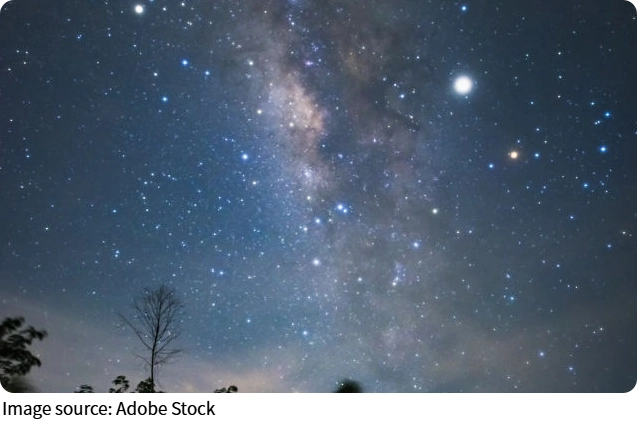
So next time you lift your eyes to the stars, think about how much that vast space connects to our daily lives. Should our next move be cleaner technology, stronger cooperation, or deeper awareness? Tell us what you think—because protecting the sky starts with all of us.